AI SDR: The Ultimate Guide to AI Sales Development Representatives in 2025
The sales landscape is experiencing a seismic shift. AI Sales Development Representatives (AI SDRs) are no longer futuristic concepts—they're the present reality transforming how B2B companies scale revenue. With the AI SDR market projected to explode from $4.12 billion in 2025 to $15.01 billion by 2030 (29.5% CAGR), understanding and leveraging AI SDRs has become mission-critical for competitive sales organizations.
What is an AI SDR?
An AI SDR (Artificial Intelligence Sales Development Representative) is an autonomous AI agent that performs the core functions of a traditional SDR—prospecting, outreach, qualification, and meeting booking—but at superhuman scale and speed. Unlike simple automation tools, modern AI SDRs use advanced machine learning, natural language processing, and multi-agent systems to engage prospects with human-like personalization.
Key Capabilities of AI SDRs in 2025:
- Autonomous Prospecting: Identifies ideal customer profiles from databases of 200M+ contacts
- Hyper-Personalized Outreach: Generates contextual emails and LinkedIn messages at scale
- Intelligent Qualification: Scores and qualifies leads using behavioral signals and intent data
- Multi-Channel Engagement: Orchestrates campaigns across email, LinkedIn, phone, and chat
- 24/7 Operations: Works continuously without fatigue, holidays, or downtime
- Self-Learning: Improves performance through continuous optimization and A/B testing
The AI SDR Market: Explosive Growth in 2025
The numbers tell a compelling story:
Market Size & Growth
- AI Sales Assistant Software Market: $18.58B (2023) → $67.36B (2030) at 20.2% CAGR
- AI SDR Specific Market: $4.12B (2025) → $15.01B (2030) at 29.5% CAGR
- Sales Automation Market: Projected to reach $16 billion by 2025
Adoption Statistics
- 22% of teams have fully replaced human SDRs with AI
- 45% of sales professionals use AI at least weekly
- 88% of sales leaders expect AI to enhance CRM processes within 2 years
- 83% of AI-adopting teams achieved higher revenue growth vs 66% of non-adopters
Sources: AI SDR Global Research Report 2025-2030. The original State of AI SDR 2025 source is no longer available; its adoption figures have not been independently reverified.
ROI & Business Impact: The Numbers Don't Lie
Revenue Impact
83% Higher Revenue Growth: Teams using AI SDRs achieved significantly higher revenue growth compared to those without AI automation.
Up to 15% Revenue Uplift: Businesses investing in AI sales tools can expect revenue increases of up to 15% and sales ROI improvements of 10-20%.
7x Conversion Rate Increase: Companies using multi-agent AI SDR systems report up to sevenfold increase in conversion rates compared to traditional one-dimensional AI models.
Cost Efficiency
83% Cost Reduction: AI SDRs cost as little as $500/month, compared to $3,000-10,000/month for full-time human SDRs including salary, benefits, and overhead.
Infinite Scalability: AI SDRs can execute thousands of personalized emails and LinkedIn messages daily, while human SDRs typically send 50-100 emails per day.
Productivity Gains
- 24/7 operation = 3x more productive hours than human SDRs
- Zero ramp time = Immediate productivity vs 3-6 month human SDR onboarding
- Consistent quality = No bad days, mood variations, or performance fluctuations
- Instant scaling = Add capacity without hiring, training, or infrastructure costs
Sources: AI vs Human SDRs Comparative Analysis, AI in Sales Real-World Examples
How AI SDRs Work: The Technology Behind the Magic
1. Multi-Agent Architecture
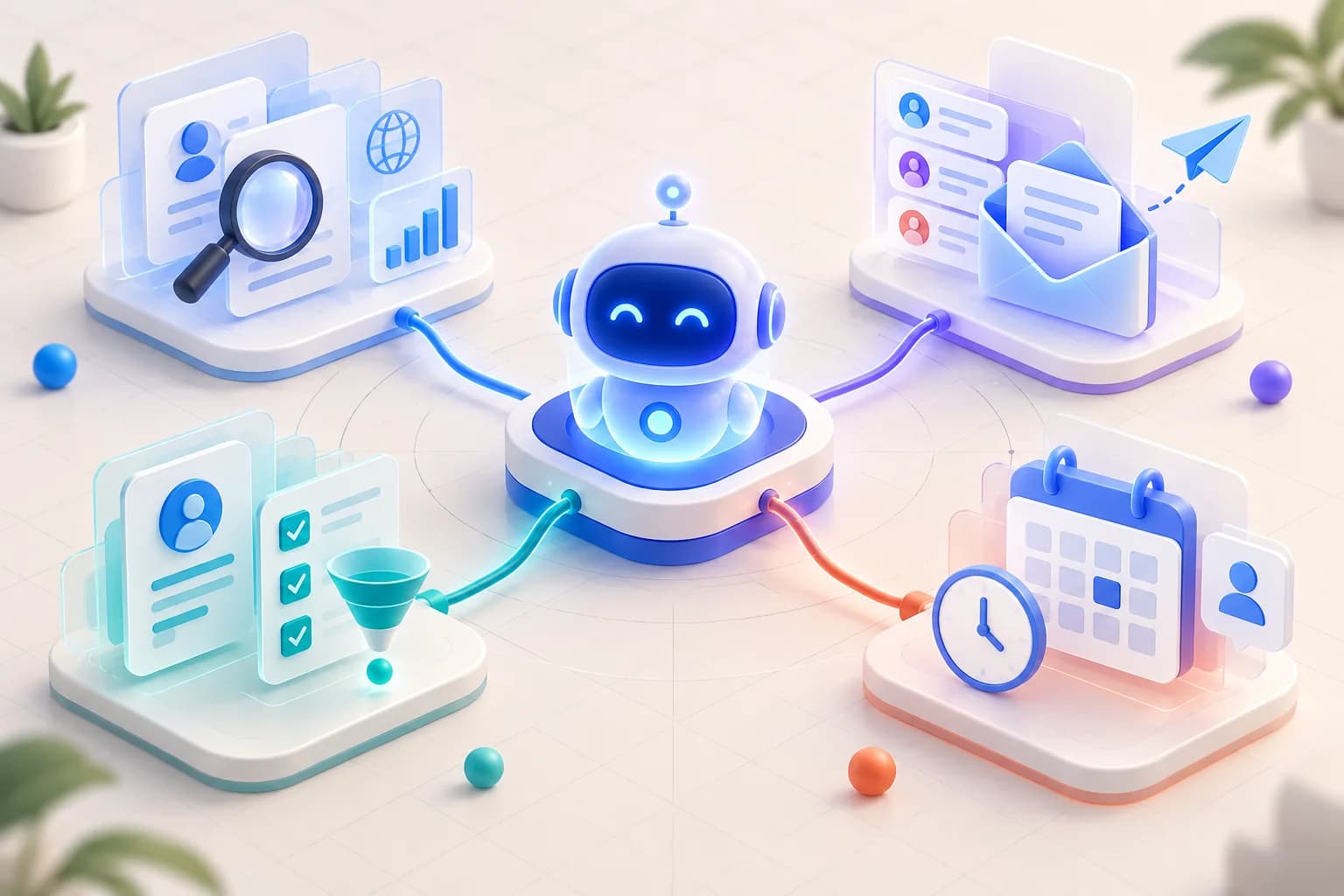
Modern AI SDRs use sophisticated multi-agent systems where specialized AI agents collaborate:
- Research Agent: Analyzes company data, news, and digital footprints
- Personalization Agent: Crafts contextual, relevant messaging
- Timing Agent: Determines optimal send times based on behavioral patterns
- Qualification Agent: Scores leads and identifies buying signals
- Follow-up Agent: Manages nurture sequences and re-engagement
2. Natural Language Processing (NLP)
Advanced NLP enables AI SDRs to:
- Understand prospect responses and sentiment
- Generate human-like conversation flows
- Adapt messaging based on engagement signals
- Handle objections and questions intelligently
3. Predictive Analytics
AI SDRs leverage machine learning to:
- Predict which prospects are most likely to convert
- Identify optimal messaging angles and value propositions
- Forecast pipeline contribution and revenue impact
- Continuously optimize performance through A/B testing
4. Intent Data Integration
Real-time buyer intelligence powers:
- Identification of in-market prospects
- Prioritization based on buying signals
- Trigger-based outreach (job changes, funding, tech adoption)
- Account-based personalization at scale
Source: The Ultimate Guide to AI-Powered Outbound SDR Tools
AI SDR vs Human SDR: The Hybrid Future
When AI SDRs Excel:
✅ High-volume outbound - Touching thousands of prospects daily
✅ Data-driven personalization - Leveraging signals humans can't process at scale
✅ Consistent execution - Following playbooks perfectly every time
✅ 24/7 coverage - Global operations across all time zones
✅ Rapid testing - Running 100s of A/B tests simultaneously
When Human SDRs Excel:
✅ Complex deal navigation - Enterprise deals with multiple stakeholders
✅ Relationship building - Deep, trust-based connections
✅ Creative problem-solving - Handling unique objections and scenarios
✅ Strategic account planning - Long-term account development
✅ High-touch personalization - Executive-level customized outreach
The Winning Strategy: Hybrid Model
A hybrid approach divides responsibilities between people and AI:
- AI SDRs handle high-volume top-of-funnel prospecting and qualification
- Human SDRs focus on high-value accounts and complex deal progression
- AI augments human productivity with research, personalization, and follow-up automation
This combination delivers the best of both worlds: the scale and efficiency of AI with the emotional intelligence and strategic thinking of humans.
Key Trends Shaping AI SDRs in 2025
1. Conversational Intelligence
AI SDRs now hold human-like conversations via email, LinkedIn, and chat—understanding context, handling objections, and adapting tone based on prospect responses.
2. Autonomous Decision-Making
Next-gen AI SDRs make independent decisions about:
- Which prospects to contact and when
- What messaging angles to use
- How to respond to replies
- When to escalate to humans
3. Multi-Channel Orchestration
AI SDRs seamlessly coordinate outreach across:
- Email (primary channel, highest volume)
- LinkedIn (social engagement, connection requests)
- Phone (AI voice calls for qualification)
- Website chat (real-time engagement with visitors)
4. Real-Time Personalization at Scale
Using intent data, technographic signals, and behavioral insights, AI SDRs generate uniquely personalized messages for each prospect—at scale previously impossible.
5. Predictive Pipeline Generation
AI SDRs forecast future pipeline contribution with high accuracy, enabling data-driven resource allocation and revenue forecasting.
Source: Future of Sales: How AI Inbound SDRs Are Redefining Go-to-Market Strategies in 2025
Implementing AI SDRs: Getting Started
Step 1: Define Your Use Case
Start with a specific, high-volume use case:
- Outbound prospecting to new accounts
- Inbound lead qualification and routing
- Event follow-up automation
- Customer expansion and upsell outreach
Step 2: Choose the Right AI SDR Platform
Evaluate platforms based on:
- Data coverage (contact database size and quality)
- Personalization capabilities (how contextual are messages?)
- Integration ecosystem (CRM, sales engagement, data providers)
- Multi-agent architecture (sophisticated vs basic automation)
- Pricing model (per-meeting, subscription, usage-based)
Step 3: Integrate with Your Tech Stack
Ensure seamless integration with:
- CRM (Salesforce, HubSpot) for data sync and attribution
- Sales Engagement (Outreach, SalesLoft) for workflow coordination
- Intent Data (Bombora, 6sense) for targeting precision
- Analytics (Tableau, Looker) for performance monitoring
Step 4: Train and Configure
Provide your AI SDR with:
- ICP definition (ideal customer profile criteria)
- Value propositions (key messaging and positioning)
- Qualification criteria (what makes a sales-ready lead)
- Brand voice (tone, style, messaging guidelines)
Step 5: Monitor and Optimize
Track key metrics:
- Response rate (% of prospects engaging)
- Meeting booking rate (% converting to meetings)
- Show rate (% of booked meetings attended)
- Pipeline contribution (attributed revenue)
- Cost per meeting (efficiency metric)
Continuously optimize messaging, targeting, and timing based on performance data.
Source: Top 10 AI Tools Transforming SDR Roles
Common Challenges & Solutions
Challenge 1: "AI-generated messages feel robotic"
Solution: Use advanced AI SDR platforms with true personalization engines that leverage multiple data signals—not just mail-merge templates with {{first_name}} tokens.
Challenge 2: "Integration complexity"
Solution: Choose platforms with pre-built integrations and dedicated onboarding support. Most enterprise AI SDR platforms offer white-glove implementation.
Challenge 3: "Measuring ROI"
Solution: Implement proper attribution tracking from first touch through closed-won. Compare cost-per-meeting and cost-per-opportunity against human SDR benchmarks.
Challenge 4: "Data quality concerns"
Solution: Partner with AI SDR platforms that maintain their own verified contact databases and use email validation to ensure deliverability.
The Future: What's Next for AI SDRs?
Voice AI Integration
AI voice calls are emerging as the next frontier, with AI SDRs making outbound calls, qualifying prospects, and booking meetings via phone—indistinguishable from human conversations.
Emotional Intelligence
Next-generation AI SDRs will detect and respond to emotional cues, adjusting tone and approach based on sentiment analysis of prospect communications.
Autonomous Deal Progression
AI will expand beyond SDR functions into full-cycle selling, autonomously moving deals through qualification, demo scheduling, objection handling, and proposal generation.
Hyper-Personalized Video
AI-generated personalized video messages at scale, featuring the prospect's company, challenges, and tailored solutions—delivered 1:1 to thousands of prospects.
Source: Future-Proofing Your Sales Pipeline: Trends and Predictions for AI-Powered SDRs in 2025
Conclusion: The AI SDR Imperative
The data is unequivocal: AI SDRs deliver 83% higher revenue growth, 7x conversion rate improvements, and 83% cost savings compared to traditional approaches. With 22% of teams already fully replacing human SDRs and the market growing at nearly 30% annually, the question isn't if you should implement AI SDRs—it's how quickly can you get started.
The winners in the 2025 sales landscape will be those who successfully blend AI efficiency with human expertise, creating hybrid sales development organizations that combine the best of both worlds.
Ready to Transform Your Sales Development?
Explore how SalesTools AI delivers autonomous AI SDR agents that book meetings on autopilot—helping B2B companies achieve 3x more meetings and 5x faster pipeline growth.
---
Key Takeaways
✅ AI SDR market growing from $4.12B to $15.01B by 2030 (29.5% CAGR)
✅ 83% higher revenue growth for teams adopting AI SDRs
✅ 7x conversion rate increase with multi-agent AI systems
✅ 83% cost reduction vs human SDRs ($500/mo vs $3,000-10,000/mo)
✅ 22% of teams have fully replaced human SDRs with AI
✅ Hybrid AI + human approach emerging as winning strategy
✅ Multi-agent architectures, conversational AI, and predictive analytics defining next generation
---
Sources:
- AI SDR Global Research Report 2025-2030
- AI vs Human SDRs: Comparative Analysis 2025
- The Future of Sales Development: How AI is Redefining SDRs
- AI in Sales: Real-World Examples